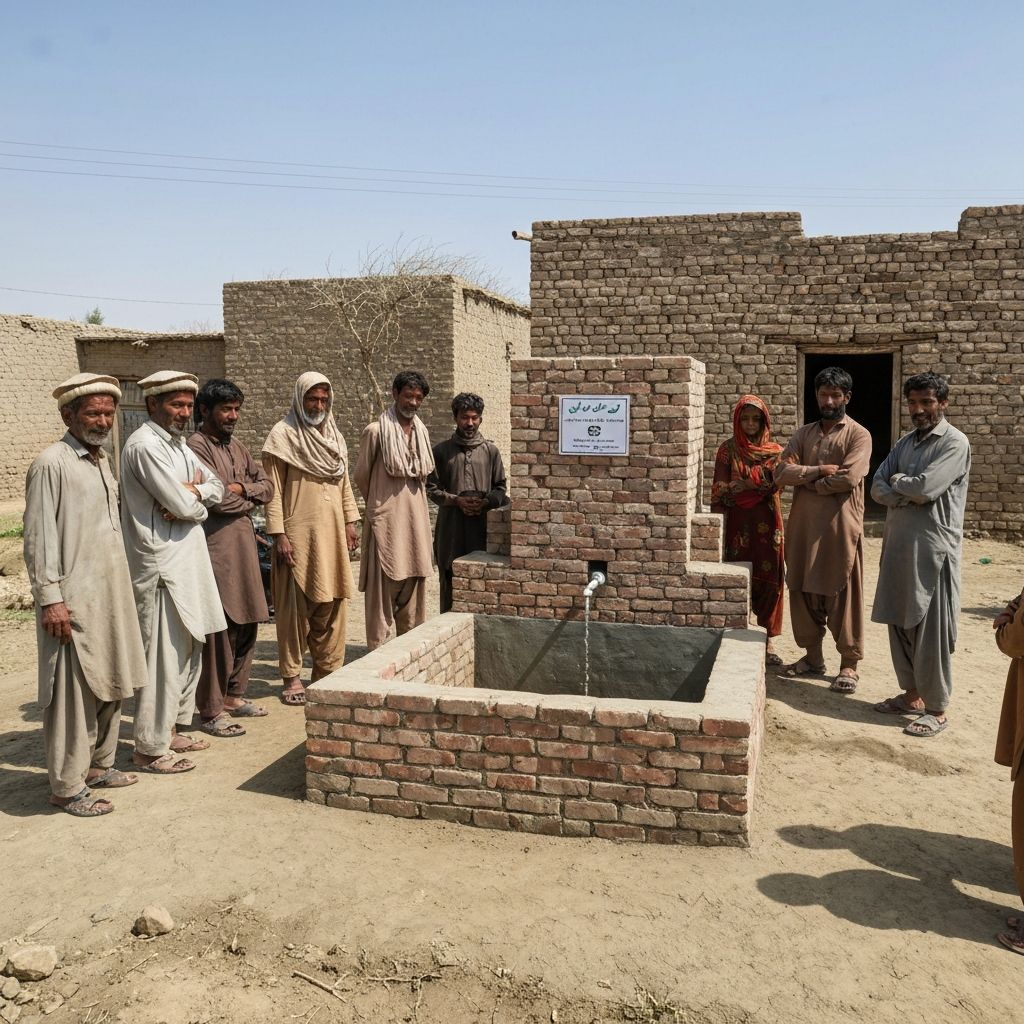
Access to clean drinking water is a fundamental human right, yet millions of people in rural Sindh still lack access to safe water sources. For communities in UC Kurkuli, waterborne diseases were once a leading cause of illness, particularly among children under five.
With the support of the Japan Water Forum Fund, Indus Welfare Association implemented a comprehensive WASH (Water, Sanitation, and Hygiene) program that has transformed health outcomes for hundreds of families.
The cornerstone of our water intervention is the Self-Help Biological Sand Filter — an innovative, low-cost water purification system that uses stable layers of sand to remove sediments and harmful bacteria from dirty water. The beauty of this technology lies in its simplicity: it can be constructed entirely with local materials and requires little technical expertise to maintain.
We've installed bio-sand filters in 100 households, directly benefiting 743 community members. Families report dramatic reductions in waterborne illnesses, and children are spending more time in school instead of at home sick.
But clean water is only part of the equation. Our program also constructed 25 community latrines across 5 villages, addressing open defecation — a practice that contaminated water sources and spread disease. Two Village Community Centers were built to serve as hubs for health education, community meetings, and cultural activities.
Infrastructure improvements including improved village pavements have benefited 1,560 community members, making daily life safer and more dignified.
The WASH program demonstrates that sustainable development requires integrated approaches. Clean water, sanitation, and hygiene education together create a foundation for healthier, more resilient communities.